Building Resilience Growth Mindset Strategies to Overcome Adversity

Understanding the Power of a Growth Mindset
In today’s fast-paced world, the ability to overcome challenges is more crucial than ever. A growth mindset—the belief that abilities can be developed through dedication and hard work—plays a pivotal role in fostering resilience in the face of adversity. This concept, popularized by psychologist Carol Dweck, not only empowers individuals to embrace difficulties but also transforms setbacks into opportunities for growth.
The relevance of a growth mindset extends beyond personal development; it applies to various domains including education, workplace dynamics, and mental health. By adopting this mentality, you unlock a world of possibilities that encourages perseverance and adaptability. Thus, understanding effective strategies to cultivate this mindset becomes essential for anyone seeking to improve their resilience.
Strategic Insights for Building Resilience
In this article, we will explore the Top 5 strategies for developing a growth mindset to successfully navigate life’s hurdles. These techniques are designed to empower you to face challenges head-on, rather than shy away from them.
- Embrace challenges as learning opportunities
- Foster a love for learning and self-improvement
- Adopt a positive internal dialogue
- Seek feedback and use it constructively
- Inspire others through collaborative growth
Stay with us as we delve into these transformative strategies that will not only guide you but also inspire resilience in those around you.
The Importance of a Growth Mindset in Overcoming Adversities: Strategies for Building Resilience
In a rapidly evolving world, one striking capability distinguishes successful individuals: the ability to adapt and thrive amidst challenges. The notion of a growth mindset, introduced by renowned psychologist Carol Dweck, posits that viewing difficulties as opportunities for personal development is a crucial factor in overcoming adversities. A growth mindset is not just a personal asset but a skill set that can be cultivated over time. In this exploration, we delve into five powerful strategies that leverage a growth mindset to enhance resilience.
5. Embrace Challenges
Challenges frequently carry a negative connotation; however, integrating a growth mindset compels one to perceive them as stepping stones rather than hindrances. An intriguing premise of the growth mindset is its encouragement to view obstacles as integral to personal growth. According to research, individuals who embrace challenges not only enhance their perseverance but also witness superior outcomes.
- Identify your challenges and tackle them head-on. Avoidance can lead to stagnation; confronting what troubles you is the first step towards growth.
- Reflect regularly on past difficulties. Recognizing how you surmounted them instills confidence and reveals the lessons embedded within those experiences.
- Practice intentionality by engaging with adversity directly. This conscious decision to face struggles head-on is a hallmark of resilience.
By embracing challenges, you strengthen resilience through an array of experiences that push your boundaries, enabling a transformative journey of growth.
4. Cultivate Positive Self-Talk
The power of internal dialogue can shape reality and potential. A growth mindset flourishes on positive self-talk, reinforcing the belief that improvement is possible through effort and hard work. Transforming statements like “I can’t” into “I can learn how to” rewires the brain for optimism and tenacity.
To refine your self-talk, consider the following strategies:
- Recognize and challenge negative thoughts. By identifying and reframing these thoughts, you redirect mental energy towards possibilities instead of limitations.
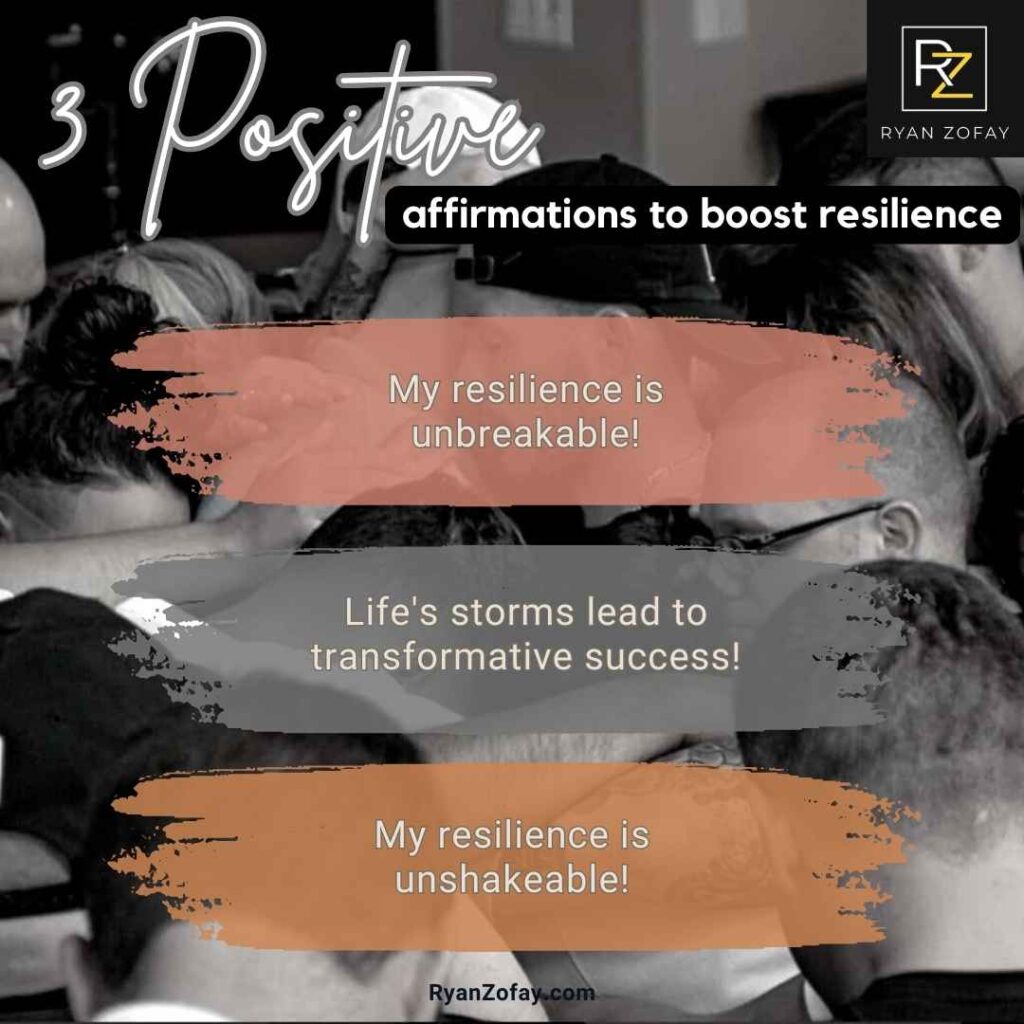
- Create affirmations that articulate your capacity for growth and evolution. Regular use of these affirmations solidifies a growth-oriented mindset.
- Immerse yourself in languages that inspire such as uplifting books and motivational quotes. By surrounding yourself with positivity, you nurture an inner dialogue that propels resilience.
Employing positive self-talk equips you with the resilience needed to navigate life’s challenges more effectively.
Understanding the Science Behind Positive Self-Talk
Neuroscientific research supports the efficacy of positive self-talk. Positive affirmations activate the brain’s reward centers, reducing stress and promoting well-being. Consistent practice reprograms cognitive processes, laying a robust foundation for resilient behavior.
3. Learn from Feedback
Feedback, whether praising or critical, offers profound insights into personal development areas. Viewing criticism as an opportunity instead of a personal affront is a key characteristic of a growth mindset. Individuals with a growth mindset typically perceive feedback as a tool for enhancement and actively seek it to aid their journey of growth.
- Regularly solicit feedback and maintain an open mindset towards it. Constructive criticism is essential for improvement.
- Upon receiving feedback, reflect deeply to extract actionable insights. Consider what modifications you can implement to foster improvement.
- Exercise gratitude towards those who provide constructive criticism. They offer a mirror to your strengths and growth potentials, paving the way for continual improvement.
Feedback, when approached proactively, becomes a powerful catalyst for development and resilience.
2. Set Realistic Goals
While aspiring high is motivating, establishing realistic and attainable goals is vital for nurturing resilience. In times of adversity, breaking goals down into smaller, manageable tasks maintains motivation and engenders a sense of achievement, gradually building confidence over time.
Guidelines for setting realistic goals include:
- Dissect larger goals into diminutive, realizable steps that can be incrementally achieved.
- Ensure your goals align with the SMART criteria: specific, measurable, achievable, relevant, and time-bound.
- Monitor progress diligently and celebrate each small victory as you advance towards broader objectives.
Concentrating on incremental progress fortifies your resilience, transforming daunting challenges into manageable tasks.
Goal Setting: A Pathway to Sustained Resilience
Research in psychology indicates that goal setting enhances performance by clarifying expectations and providing a clear roadmap. By setting and achieving small goals, individuals experience a boost in self-efficacy, vital for maintaining resilience in turbulent periods.
1. Foster a Supportive Community
The quest for resilience becomes more achievable through collective effort. Constructing a network of support bolsters your ability to navigate times of difficulty. People embodying a growth mindset often actively seek out environments fostering mutual development, encouragement, and perseverance.
Ways to foster a supportive community include:
- Engage with groups or clubs that align with your interests. Shared objectives create momentum and camaraderie.
- Build relationships with individuals who share a growth mindset. A mutually supportive network can amplify resilience.
- Participate in mentorship. Both offering and receiving guidance enriches personal and communal growth.
A supportive community not only serves as a source of encouragement and accountability but also acts as a buffer during times of adversity.
In conclusion, embracing a growth mindset is indispensable in overcoming adversities. By integrating strategies to embrace challenges, foster positive self-dialogue, leverage feedback, set realistic goals, and build a supportive community, you construct a resilient and adaptable framework capable of meeting life’s uncertainties head-on.
| Category | Description |
|---|---|
| Positive Self-Talk | Cultivating a growth mindset requires nurturing a habit of positive self-talk. This inner dialogue influences how challenges are perceived. When faced with adversity, individuals who engage in encouraging self-talk are more likely to view setbacks as opportunities for learning, which can greatly enhance their resilience. By consciously replacing negative thoughts with affirmations, they can foster a belief in their ability to improve and adapt. |
| Setting Achievable Goals | Goal-setting is an effective strategy that fuels perseverance. By breaking down larger challenges into smaller, manageable tasks, individuals can track their progress and celebrate small victories. This incremental approach not only provides motivation but also reinforces a sense of capability and resilience, making it easier to tackle bigger obstacles over time. |
| Seeking Feedback | Constructive criticism plays a pivotal role in personal and professional development. Individuals with a growth mindset actively seek feedback, viewing it as a tool for growth rather than a personal attack. Embracing feedback helps them to identify areas of improvement and adapt their strategies accordingly, ultimately enhancing their resilience in the face of challenges. |
| Building a Support Network | Connection with others is crucial in overcoming adversity. Building a robust support network provides encouragement, shared experiences, and practical advice. Surrounding oneself with positive, growth-oriented individuals can inspire perseverance and enhance one’s ability to bounce back from setbacks. The exchange of stories and strategies fosters a sense of community and reinforces resilience. |
Frequently Asked Questions about Growth Mindset and Resilience
What is a growth mindset, and how does it relate to overcoming adversity?
A growth mindset is the belief that abilities can be developed through dedication and hard work. This perspective is crucial when facing challenges, as it encourages individuals to view setbacks as opportunities for learning rather than insurmountable failures. Embracing a growth mindset helps in building resilience by fostering a proactive approach to problem-solving and self-improvement.
How can I start to develop a growth mindset to enhance my resilience?
Developing a growth mindset involves shifting perspectives from a fixed mindset, which views abilities as static, to one focused on growth. Start by embracing challenges instead of avoiding them, and persist through setbacks by deploying strategies such as seeking feedback, learning from criticism, and celebrating small victories. Over time, these practices can contribute to increased resilience and adaptability.
Can adopting a growth mindset improve mental health, and if so, how?
Yes, a growth mindset can positively impact mental health by reducing stress and anxiety levels. This mindset encourages individuals to perceive challenges as solvable, which can decrease feelings of helplessness and bolster confidence. The focus on growth over time can invite greater satisfaction and reduce negative emotional responses to adversity, contributing to overall mental well-being.
Are there practical exercises to reinforce a growth mindset in daily life?
Certain exercises can help reinforce a growth mindset. Practice reflective journaling to track personal progress and strategies. Engage in activities that are outside your comfort zone to expand your skill set. Regularly set realistic goals and milestones, and after achieving them, reflect on the learning process rather than solely the outcomes. These activities can cultivate a mindset oriented towards growth and resilience.
What role does self-compassion play in developing a growth mindset and resilience?
Self-compassion is integral to fostering a growth mindset and resilience. It involves being kind to oneself during times of failure and recognizing that mistakes are part of the human experience. Self-compassion allows individuals to treat setbacks as learning opportunities without excessive self-criticism, paving the way for constructive growth and emotional resilience.
Conclusion
As we navigate the tumultuous landscape of life’s challenges, understanding the concept of a growth mindset emerges as a powerful tool. The core takeaway from our exploration of growth mindset techniques in overcoming adversity is the remarkable role they play in building resilience. Adopting a growth mindset instills the belief that skills and intelligence can be developed through dedication and hard work, ultimately transforming obstacles into opportunities for growth.
Key Insights
- The belief in one’s capacity for development is foundational to a growth mindset, encouraging individuals to embrace challenges rather than shy away from them.
- Viewing failures as valuable learning experiences rather than insurmountable barriers fosters an environment of continuous improvement and innovation.
- The practice of setting realistic yet challenging goals acts as a catalyst for personal growth, pushing individuals to stretch beyond their comfort zones.
- Seeking feedback and incorporating constructive criticism enhances self-awareness and paves the way for targeted development.
- Building a supportive network and engaging with a community that values growth fosters a culture where resilience thrives.
As we reflect on these key points, it becomes evident that cultivating a growth mindset does not merely act as a shield against adversity; it transforms adversity into a stepping stone towards personal evolution. The techniques highlighted provide practical pathways for individuals and communities to harness the power of change. While the path to resilience requires effort and commitment, the reward is a profound sense of empowerment and capability. By embedding the principles of a growth mindset into our daily lives, we not only nurture our resilience but also create a dynamic environment conducive to boundless success.

Linda Carter is a writer and growth mindset specialist with expertise in cognitive development and resilience training. With extensive experience helping individuals transform limiting beliefs and unlock their potential, she shares practical mindset strategies on our platform. Her goal is to empower readers with science-backed techniques to cultivate adaptability, embrace challenges, and achieve continuous personal and professional growth.